Your brushes are lined up, your canvas is stretched, but something about the room itself kills the mood before you even pick up a tool. The walls feel bare, the light is wrong, and the clutter pulls your focus in six directions at once.
The right art room ideas do more than look good on a mood board. They shape how long you stay at the easel, how freely ideas flow, and how quickly you recover from creative blocks.
Key Takeaways
- Zone your room into a messy zone, a calm focus zone, and a display area to protect your mental state while working
- Store brushes and markers in transparent jars at eye level so choosing tools becomes part of the creative ritual, not a chore
- Arrange your primary workspace near diffused natural light, then layer adjustable task lighting for evening sessions
- Group tube paints in rainbow order and paper in tonal stacks to create visual calm that makes the space feel curated
- Add a small lounge corner with soft lighting specifically for brainstorming so your brain learns that chair means ideas
Full Video Transcript
Have you ever stepped into an art studio and felt uninspired by blank walls or cluttered surfaces that distract from your creativity? Imagine walking into a space that feels like an extension of your imagination, where every frame, shelf, color, and lighting design supports your artistic flow. This video breaks down 10 deeply considered art room decor ideas from optimizing your workspace and lighting to curating inspiring focal points and displaying your work. By the end, you'll be ready to
transform your art space into a vibrant creative sanctuary that nurtures both energy and zen and sparks motivation every time you walk in. [Music] Before we dive into today's video, I'd like to welcome you to Decoredia, your go-to source for home decor inspiration. We bring you creative ideas to transform your space with style and ease, helping you elevate every corner of your home effortlessly. If you're new here, don't forget to hit that subscribe button and turn on
the bell icon so you never miss out on our latest decor inspirations. Now, let's get started. [Music] D. [Music] Noo. [Music] How can you optimize layout and furniture for creative flow and productivity? Designing an art room layout means balancing functionality with comfort. Begin with a central workspace suited to your practice, a large table for painting, a drafting desk for illustration, or easels arranged near natural light. Place tool storage, cabinets, carts, pegboards within arms reach so materials
are accessible but not cluttering the surface. Create zones, a messy zone for painting and cleaning supplies, a calm zone for sketching or digital work, and a display area for ongoing projects. Consider standing desks or adjustable hunch height tables to support posture. Add a small lounge corner with a comfy chair and soft lighting. Ideal for brainstorming ideas or taking creative breaks. With thoughtful zoning and ergonomic choices, your space will support sustained focus and artistic play. [Music] How
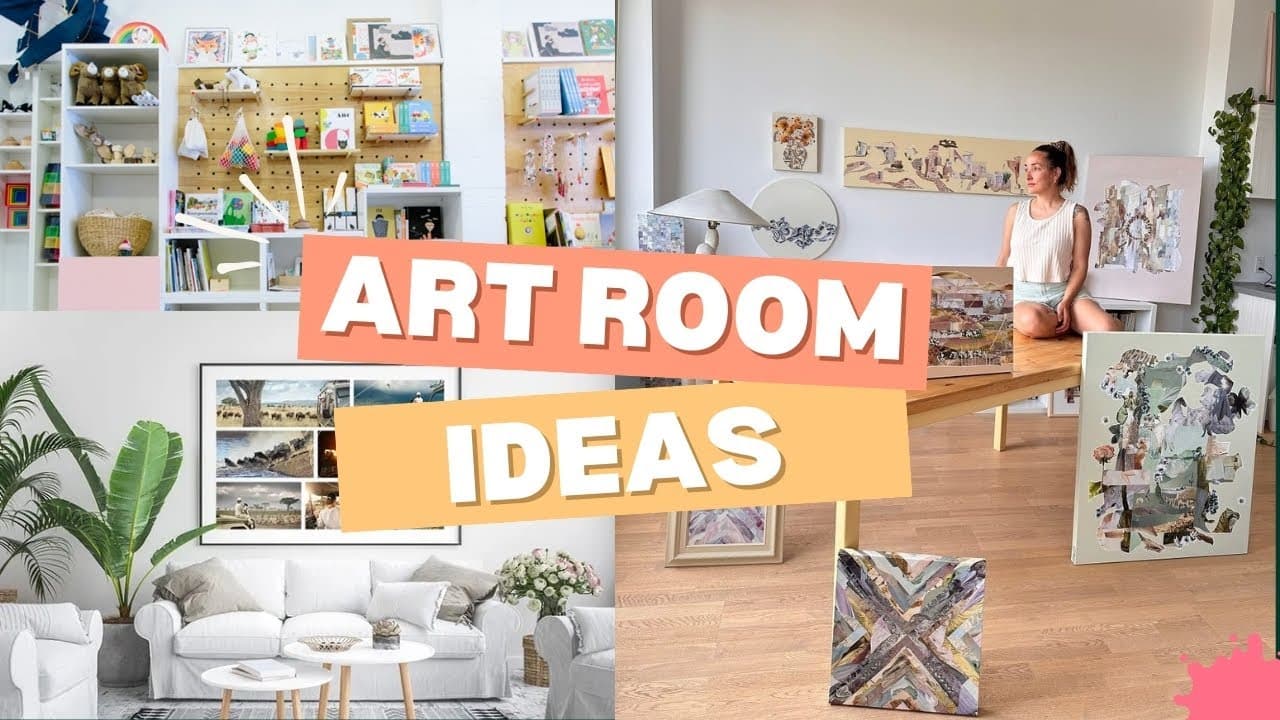
should you organize and display art supplies for function and aesthetics? Curating your materials into visible, categorized storage keeps your space usable and beautiful. Use transparent jars or acrylic trays for frequently used brushes, pencils, markers, or pallets displayed on shelves at eye level. Larger items like sketchbooks or canvases can live in vertical cubbies or slotted bins, so you can choose by simply pulling closer. Group color-coded supplies. Tube paints in rainbow order or paper sheets in tonal stacks
for visual order. Install pegboard or magnetic boards to hang tools, scissors, or beauty brushes, turning them into a design feature. Label each container with type and intended purpose. When tools are both easy to find and serve as decor, your workspace feels curated and ready to inspire. [Music] Question. [Music] What lighting setups best support both mood and clarity? Good lighting is essential in an art room. Begin with a mix of natural light from windows, ideally diffused with
sheer curtains to avoid direct glare. Supplement with adjustable daylight balanced LED task lamps positioned over work zones to reveal true colors. Incorporate overhead ambient lighting with dimmable fixtures such as track lighting or pendant LEDs so you can control brightness for different tasks. Add accent lighting like LED strips along floating shelves or picture lights to softly illuminate completed works and inspire. Position your main art station so the light falls from the side, reducing shadows. This layered lighting
strategy ensures you have both clarity for precision work and mood lighting for inspiration. [Music] How can you feature your artwork and visual inspirations? An artist's room should display completed pieces, works in progress, and sources of inspiration. Install a gallery wall with floating frames or ledges to showcase finished paintings, prints, or sketches. Rotate imagery regularly. Use a wire and clip system to hang current work or reference photos, making it easy to swap pieces. A pin board or
corkboard allows you to layer images, fabric swatches, or project plans. Incorporate a couple of art themed posters, or vintage prints that resonate with your style. For a centerpiece, consider a large scale piece above your desk or lounge area. These visual displays not only celebrate your work, but continually remind you of your artistic vision and set the emotional tone of your creative environment. [Music] [Music] What materials and textures make the room visually and artistically inspiring? Aesthetic variety
stimulates creativity. Combine unfinished wood or metal desks with textured rugs, painters drop cloth curtains, or vintage parquet flooring. Feature raw materials, exposed brick, shiplap paneling, or industrial grid ceilings to evoke a studio vibe. Add chalkboard paint or magnetic strips along one wall to jot color notes or sketches. Introduce tactile accessories, linen tool rolls, woven baskets full of yarn, or clay bowls holding mixing tools. Bring in a few plush elements, velvet cushions, faux fur rugs for comfort.
This interplay of textures feels warm, grounded, and emotionally rich. supporting both high energy painting sessions and quiet reflection moments. Let me know in the comments which textures vibe with your style. [Music] How do you balance bold color with neutral tones? Color influences mood. So, a balanced palette matters. Paint large surfaces, walls, floors in soft neutrals like pale gray, warm white, or muted beige to serve as a calming backdrop for your work. Add pops of color through
accent walls behind your workspace or with vibrant curtains, rugs, or shelves. Use brightly colored bins, tool containers, or chair upholstery to bring energy. Even a bold drop of color in a statement artwork or swatch wall can elevate focus. Too much color everywhere can overwhelm you, but neutrals anchoring bold accents create a visually stimulating yet grounded canvas. [Music] [Music] How can plants and greenery support creativity and well-being? Plants not only beautify but refresh the air and elevate
mental space. Choose hardy plants like snake plants, paos, or zezy plants if your art room lacks direct light. These survive subtle conditions. If you have good light, add succulents, herb gardens, or trailing vines to bring a natural rhythm. Position plants at intervals by the window, desk, or shelves to soften edges and lift mood. Use planters and simple ceramic, earthy, terracotta, or pastel finishes to match your palette. For convenience, small potted cacti or airplants can sit on
your desk. These touches connect your studio environment to living energy, reducing stress and nourishing creativity. [Music] Crafting an art room that's both beautiful and purposeful means designing for creative flow while expressing your identity by optimizing layout, layering light, displaying tools and art thoughtfully, balancing color and texture, integrating plants and tech with care, defining zones, and maintaining a tidy routine. You shape a space that supports inspiration and progress. Take one idea, maybe a gallery wall, a cozy
nook, or a display of your tools, and begin your transformation today. Watch how a few thoughtful design steps can open creative doors you hadn't known existed. [Music]