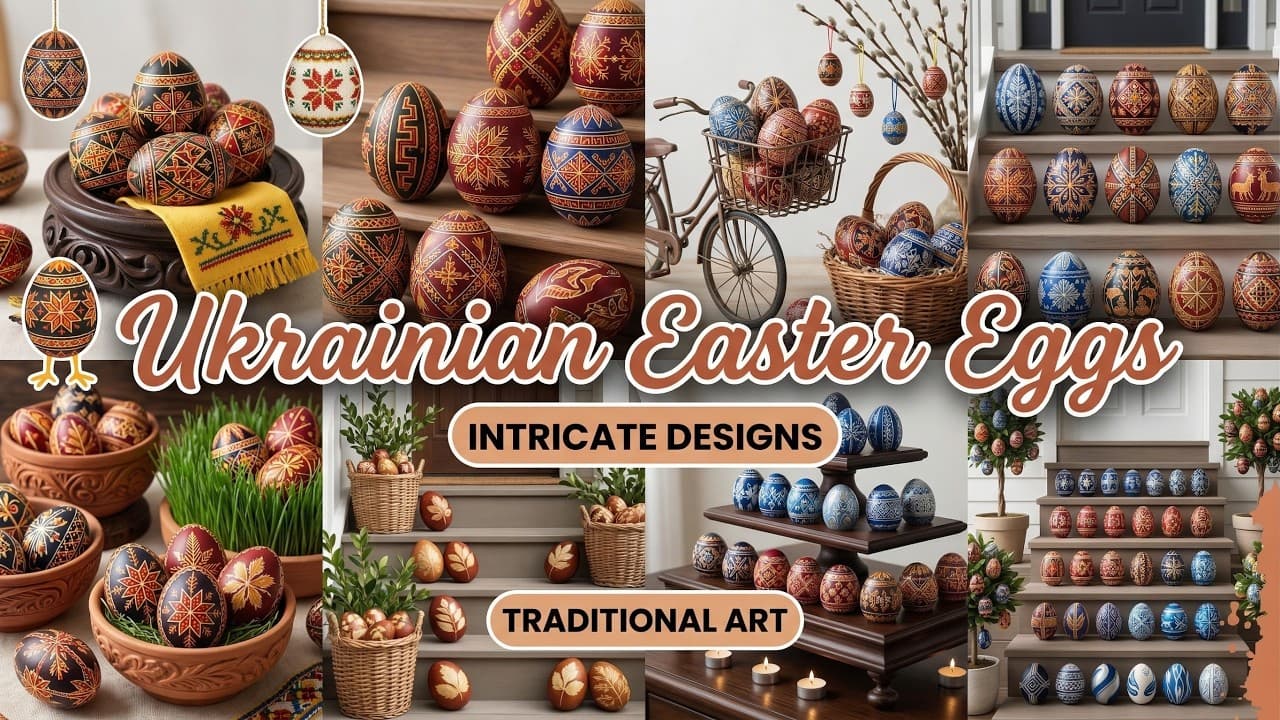
Your kitchen table still has last year's plastic eggs tucked in a basket somewhere, but nothing stops a room like a bowl of hand-painted pysanky catching the morning light. The geometric lines and jewel-toned dyes pull every eye in the space instantly.
Ukrainian Easter eggs, known as pysanky, are far more than seasonal decoration. Each symbol carries centuries of meaning, and understanding that history transforms how you style and display them in your home.
Key Takeaways
- Traditional pysanky symbols like the triangle, spiral, and deer carry specific meanings tied to protection, eternity, and abundance
- The wax-resist batik method builds color in layers, meaning lighter dyes must be applied before darker ones
- Displaying pysanky in a shallow wooden bowl or on a tiered stand preserves the shells while creating a focal point
- Natural dyes from onion skins, beet juice, and chamomile produce the muted, earthy tones seen in heritage designs
- Regional styles differ dramatically: Hutsul eggs favor bold reds and blacks, while Poltava designs use fine white linework on a dark field
Full Video Transcript
Have you ever seen an Easter egg so detailed, so symbolic that it looks more like a piece of art than a decoration? What if every line, every color, and every symbol on an egg carried a hidden meaning passed down through generations? Ukrainian Easter eggs known as pyeni are not just decorations. They are powerful symbols of hope, protection, and renewal. These intricate designs are created using a traditional wax resist method that transforms simple eggs into masterpieces filled
with meaning. Imagine holding an egg that tells a story through its patterns, symbols of life, love, strength, and new beginnings. Today, we're exploring Ukrainian Easter eggs, Pyeni, with deep meanings, detailed designs, and the traditions behind them. Before we dive into today's video, I'd like to welcome you to Decoredia, your go-to source for home decor inspiration. We bring you creative ideas to transform your space with style and ease, helping you elevate every corner of your home effortlessly.
If you're new here, don't forget to hit that subscribe button and turn on the bell icon so you never miss out on our latest decor inspirations. Now, let's get started. behind. What are Ukrainian Easter eggs and why are they so special? Ukrainian Easter eggs known as pyeni are a traditional form of decorated eggs created using a wax resist technique. Unlike simple painted eggs, these are carefully designed with intricate patterns that carry symbolic meanings. The word piseni
comes from a Ukrainian word meaning to write because the designs are written onto the egg using wax and dye. This process makes each egg unique and meaningful. These eggs are considered more than decoration. They are believed to bring protection, good fortune, and blessings to the home. If you love meaningful traditions like this, make sure to like and share this video. How is the traditional wax resist method used in Pyeni? The wax resist method is the defining
technique behind Piseni. Artists use a special tool to apply melted wax onto the egg in specific patterns. The egg is then dipped into dye and the wax protects certain areas from color. This process is repeated multiple times with different colors, creating layered designs. At the end, the wax is removed to reveal intricate patterns that could not be achieved with simple painting techniques. Subscribe for more cultural art and DIY inspiration. Do Why do piseni designs include so
many symbols? Symbols are at the heart of Piseni design. Each pattern has a specific meaning that reflects beliefs, hopes, and traditions. These symbols were originally used as a form of storytelling, passing messages and blessings from one generation to the next. Instead of random decoration, every line and shape on the egg is carefully chosen to represent something important. Check the description for symbol meaning guides. Hey, hey, hey. What do common symbols on Ukrainian Easter eggs represent? Common
symbols include sun patterns, which represent life and energy, and plant designs, which symbolize growth and renewal. Geometric shapes often represent harmony and balance, while animal motifs can symbolize protection or strength. These symbols are deeply rooted in cultural beliefs and are often combined to create complex messages on a single egg. Comment if you love symbolic art. Hey, hey, hey. How long does it take to create a detailed pyeni egg? Creating a pyeni egg can take several hours
or even days depending on the complexity of the design. Each step requires patience and precision from applying wax to dipping the egg in multiple layers of dye. The time invested in each egg reflects the importance of the tradition and the care put into creating something meaningful. Subscribe for more artistic inspiration. How do colors influence the meaning of pisenki? Colors play a powerful role in Pyeni designs. Each color carries its own meaning and adds depth to the
symbolism. Red often represents love and life. Yellow symbolizes light and harvest. And black can represent eternity or remembrance. By combining different colors, artists create layers of meaning that make each egg unique and expressive. Like this video if you enjoy colorful traditions. How can beginners start creating Ukrainian Easter eggs? Beginners can start with simple designs and gradually learn more complex patterns. Basic tools include wax, a stylus tool, dyes, and eggs. Starting with simple lines and shapes helps
build confidence and skill. Over time, beginners can experiment with more detailed designs and symbolic patterns. Check the description for beginner supplies. How are pyeni used during Easter celebrations? Pyeni are often given as gifts during Easter as symbols of goodwill and blessings. They are also displayed in homes as decorations that represent hope and renewal. In some traditions, these eggs are believed to protect the home from negative energy. Comment if you celebrate Easter traditions. How can modern designs
be combined with traditional Piseni? While Pyeni has deep traditional roots, many artists now incorporate modern styles into their designs. Contemporary patterns, abstract art, and new color combinations allow artists to express creativity while honoring tradition. This blend of old and new keeps the art form alive and evolving. Like and share this video if you enjoy modern art. Why are paseni considered a form of storytelling? Each paseni egg tells a story through its symbols, colors, and patterns. These
stories often represent wishes for health, prosperity, protection, or love. By combining different elements, the artist creates a visual message that can be understood by those familiar with the tradition. Subscribe for more cultural storytelling content. How do regional styles influence Ukrainian Easter eggs? Different regions in Ukraine have unique styles and patterns. Some areas prefer bold geometric designs while others focus on delicate floral motifs. These regional differences add diversity and richness to the tradition. Comment if you love
cultural diversity in art. How can symmetry create balance in pyeni designs? Symmetry is a key feature in many Pyenki designs. Balanced patterns create harmony and make the egg visually pleasing from every angle. This symmetry also reflects deeper meanings of order and unity. Like this video if you appreciate balanced design. How are natural elements represented in Pyeni? Nature plays a major role in Pyeni symbolism. Elements like flowers, leaves, water, and the sun are often included to represent
life and growth. These designs connect the eggs to the natural world and seasonal changes. Subscribe for more nature inspired ideas. How can layering colors create depth in designs? Layering colors through the wax resist process creates depth and complexity. Each layer adds a new dimension to the design, making it richer and more detailed. This technique allows artists to create multi-dimensional patterns. Check the description for layering tips. How can intricate line work enhance Piseni designs? Fine lines and
detailed patterns are essential to Pyenki artistry. These lines create structure and guide the placement of symbols and colors across the egg. The precision required makes each egg a true work of craftsmanship. Check the description for advanced techniques. Ukrainian Easter eggs or pyeni are more than just decorations. They are stories, symbols, and traditions captured in delicate designs. Each egg represents creativity, patience, and a deep cultural heritage that has been passed down through generations. From intricate patterns to
meaningful colors, these eggs remind us of the beauty of tradition and the joy of creating something truly special. When you create or display Pyeni, you're not just decorating. You're continuing a timeless tradition of art, meaning, and celebration.