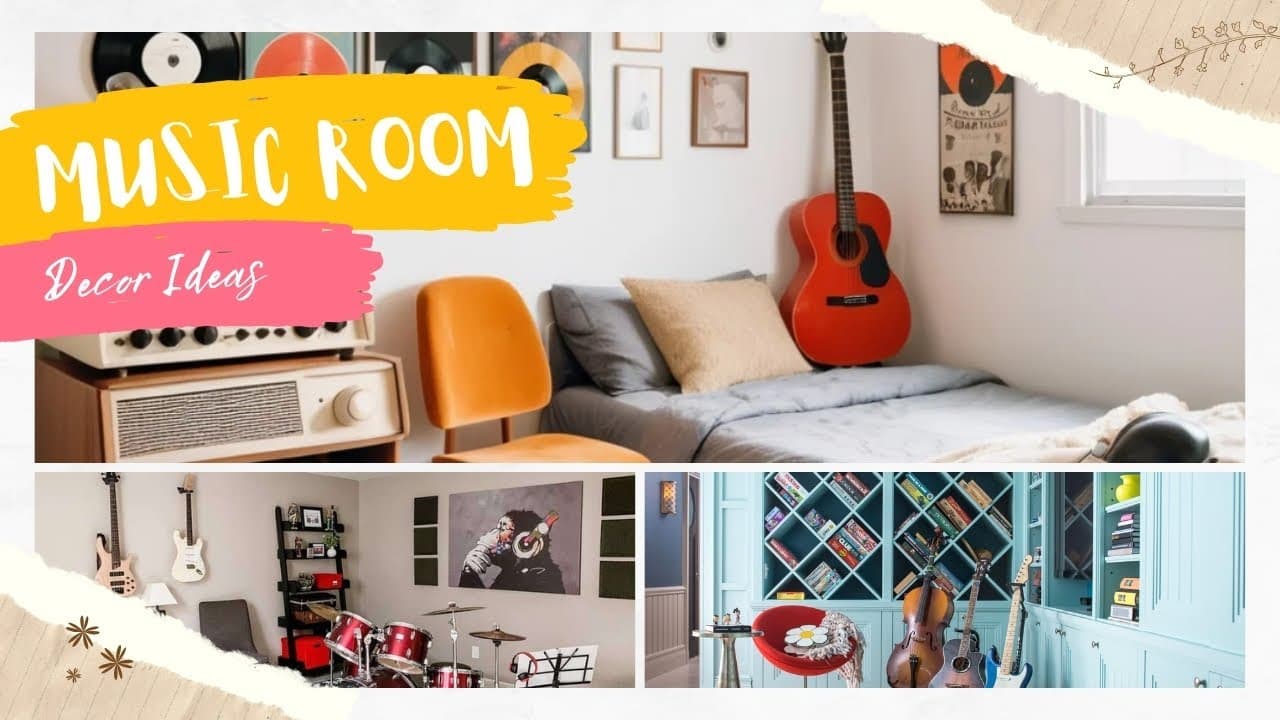
Your guitar leans against the wall, cables snake across the floor, and that one bare corner has been bothering you for months. A dedicated music room deserves more than an afterthought setup.
The right music room decor ideas do double duty, expressing your sonic identity while keeping gear organized and acoustics in check. This roundup covers wall art, furniture, and creative details that actually work.
Key Takeaways
- Mount floating shelves at staggered heights to display instruments as decor without sacrificing floor space
- Use fabric wall panels wrapped in speaker cloth to improve acoustics and add texture simultaneously
- Anchor the room with a vintage-style area rug to reduce floor reflection and define the listening zone
- Mix neon signage with framed album art to layer light sources and create depth on a single feature wall
- Choose furniture with built-in cable management, like desks with grommets, to keep the aesthetic clean
Full Video Transcript
Have you ever stepped into a music room and felt like something was missing? Like the space could hum with personality and creativity, but instead feels flat and uninspired. Imagine that room transformed into a sanctuary of sound and style where instruments are displayed like cherished art and every element, acoustics, lighting, furniture, and decor works in harmony. In this video, we're diving deep into 10 rich design strategies for music rooms. So, by the end, you'll know exactly how
to craft a space that's visually striking, acoustically sound, and personally expressive. Whether you're a guitarist, pianist, collector, or casual listener, these ideas will help you elevate your music experience and inspire every tune you play. Before we dive into today's video, I'd like to welcome you to Decorpedia, your go-to source for home decor inspiration. We bring you creative ideas to transform your space with style and ease, helping you elevate every corner of your home effortlessly. If you're
new here, don't forget to hit that subscribe button and turn on the bell icon so you never miss out on our latest decor inspirations. Now, let's get started. Heat. Heat. How can you optimize lighting and tone to Create a creative yet cozy environment. Good lighting sets both mood and practical utility. Start with a central overhead fixture like a semif flush chandelier or pendant with a warm LED bulb to provide ambient lighting in a tasteful style such
as a minimalist drum shade or vintage filament design. Next, position directional task lamps near practice areas, a piano or guitar stand to ensure enough light for reading sheet music without harsh glare. Accent lighting like LED strip lights or wall washers behind acoustic panels or floating shelves helps highlight instruments as sculptural pieces. Add floor lighting with floor or tripod lamps near lounge chairs or record players to balance brightness and create zones. These layers, ambient task accent, work
together to create both a musicians workspace and an inviting atmosphere where creativity flows naturally. Heat. Heat. What acoustic and storage considerations help blend sound quality with decor? Balancing acoustics with storage preserves function and style. Start by covering bare walls with fabric wrapped acoustic panels in tones that match your decor. Muted green, soft gray, or warm wood tones so they absorb reflections without standing out. Install floating shelves or cabinets that hold sheet music, cables, pedals, or vinyl
in a visually pleasing way. Use slatted wood panels behind your piano or amp area. They diffuse sound and act as stylish feature walls. Large rugs, curtains, or a tapestry on one wall also reduce reverberation. If you play loud instruments, consider bass traps in room corners. These can be disguised as tall planters wrapped with acoustic material. This careful integration keeps the room sounding crisp while maintaining a clean, intentional aesthetic. How should you display your instruments to blend
artful presence with accessibility? Your instruments deserve to shine. Wall-mounted guitar hooks show off electric and acoustic guitars as visual art while creating more floor space. A piano needs a dedicated platform, but ensure it sits on a rug or riser to manage acoustics. Use instrument stands that double as decor, like a sleek tripod for saxophones or custom wood stair style stands for ukuleles or violins. For smaller instruments, harmonas, tambourines, vintage mics, install shadow boxes with subtle LED
backlighting. Group instruments by color, finish, or genre for a gallery-like display. Each instrument becomes both accessible and part of your room's visual language. Engaging display, like and share. If your instruments are your pride and joy, Doctor. How can color, texture, and materials bring warmth while supporting musical function? Material and color decisions affect both feel and sound. Darker tones like deep teak, charcoal gray, or navy add coziness, but may absorb more sound, so balance them with lighter
textures. Wood flooring or dark stained wood walls bring richness. A large rug adds tactile warmth and acoustic benefit. Incorporate leather or fabric seat cushions and wool throws for softer tones. For a vintage vibe, choose muted burgundy wall paint or a mid-century inspired mustard sofa. For modern minimalism, lean on grayscale tones with silver, chrome, or black steel accents. Textured acoustic felt panels can double as visual softness. Mixing smooth wood, plush fabric, and matte finishes ensures a layered,
inviting atmosphere that supports creativity. Tell me your favorite material combo. Comment below. What seating and layout options support both playing and hosting listeners? A music room often needs to function as both studio and gathering space. Choose seating with both comfort and acoustic sensitivity in mind. Leather or upholstered lounge chairs work well. They don't add unwanted sound reflections like smooth plastic might. A small love seat or two mid-century armchairs can face the piano or the performer area.
Include small side tables for drinks or pedals. If hosting rehearsals, use stackable stools or benches that match your room's finish. Arrange seating in a semicircle around the player to support connection and focus. Clear sight lines to both the instruments and any equipment like a recording interface or tablet. Keep the space fluid and inviting to both play and listen. What decorative accents can reflect musical passion? and personality. Details give soul. Frame iconic album covers or sheet music
prints and hang them gallery style. Display vintage audio equipment even if decorative like tube amps, realtore tape recorders or retro mic stands. Add music themed objects, a sculpture of a note, sheet music wallpaper behind a shelf or vinyl records arranged frame in. Include a memory corner, photos of performances, signed posters or travel souvenirs from gigs. A turntable on display continues the vibe and provides ambient music. These touches root the room in personal history and show visitors
that music isn't just a hobby, it's part of your identity. How can you incorporate tech while keeping the room uncluttered and aesthetic? Tech is essential, but it can be sleek. Mount a tablet or music stand in view, framed in wood or black metal to blend. Tuck cables behind channels or adhesive clips. Hide power strips in bleached wooden boxes. Use wireless speakers with fabric covers. Avoid large visible subwoofers unless they match room colors. If using a recording
interface or stage mics, house them in litted racks or storage cubes. A compact amp can be styled as a decorative accent on a stand with a woven cover. These solutions make tech feel like a seamless part of your music haven, not an eyesore. Crafting a music room that delights both eyes and ears means blending acoustic function with style, personal passion with creative comfort. By layering lighting, acoustics, instrument display, texture, tech, greenery, and carefully placed personal touches,
you create a space that draws you in every time you play or listen. Whether you're a solo dreamer, a teacher, or a family exploring sound together, this room becomes your creative hub. Start with one idea from lighting to tech hiding and build your ideal music retreat step by step.