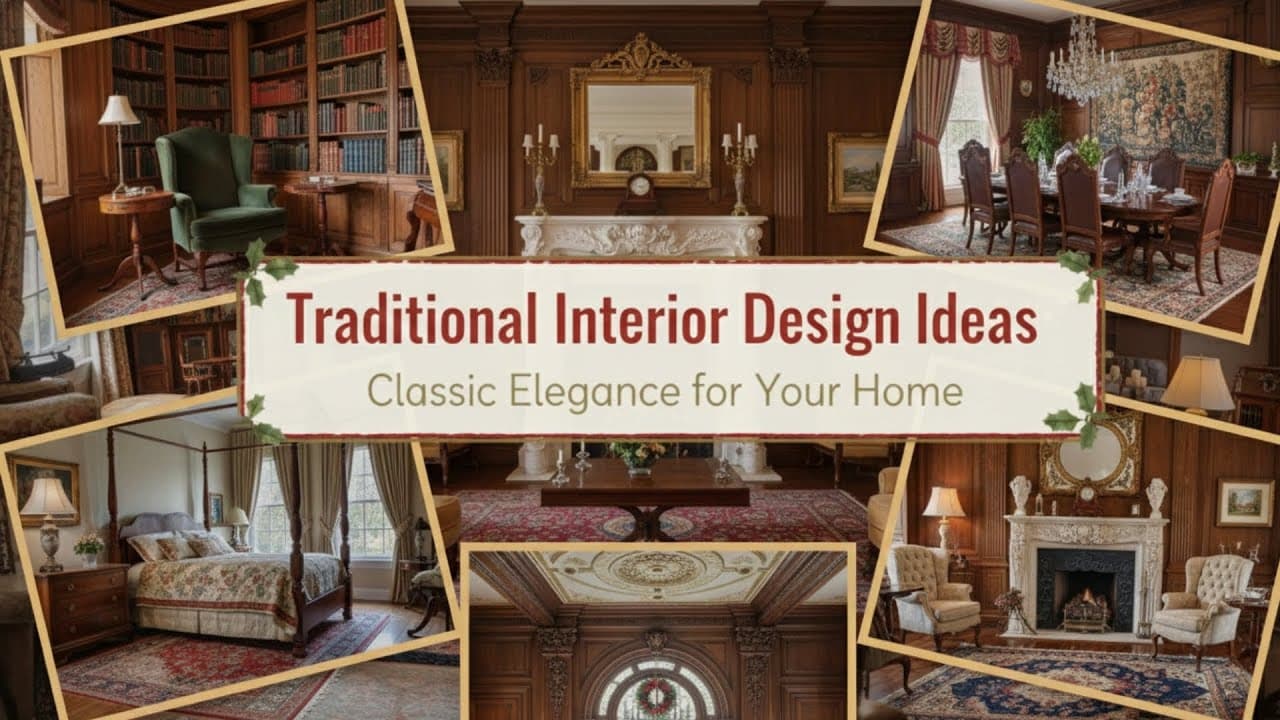
You glance around your living room and notice the mismatched furniture, the bare walls, and the sense that nothing quite belongs together. The space functions, but it does not feel like a home with history or intention behind it.
Traditional interior design ideas solve exactly that problem by layering warm wood tones, tailored upholstery, and curated antiques into a cohesive story. Each choice builds on the last, creating rooms that feel both polished and deeply livable.
Key Takeaways
- Anchor each room with a symmetrical furniture arrangement around a focal point like a fireplace or large window
- Choose upholstery in solid jewel tones or small-scale patterns such as damask or toile to add depth without visual chaos
- Layer window treatments by combining a roller shade with floor-length drapery panels hung from crown-level rods
- Introduce patina through one or two genuine antique or vintage pieces rather than filling a room with reproductions
- Use trim paint one shade darker than wall color to sharpen architectural details like crown molding and wainscoting
Full Video Transcript
What if your home could feel timeless, elegant, and [music] rich with story, all while feeling warm and welcoming? Have you ever wanted to bring a classic, sophisticated look into your [music] space without making it feel outdated? That's the magic of traditional decor. In a world of fleeting trends, traditional interior design remains beautifully grounded. In this video, we're exploring [music] traditional decor ideas that blend grace, history, and craftsmanship, helping you create [music] a space that honors the
past while feeling perfectly at home in the present. Before we dive into today's video, [music] I'd like to welcome you to Decorpedia, your go-to source for home decor [music] inspiration. We bring you creative ideas to transform your space with style and ease, helping you elevate [music] every corner of your home effortlessly. If you're new here, don't forget [music] to hit that subscribe button and turn on the bell icon so you never miss out on our latest
decor inspirations. Now, let's get started. >> [music] [music] [music] >> What defines traditional interior decor [music] and why is it still relevant today? Traditional decor is rooted in classic [music] European style and emphasizes balance, symmetry, and harmony. It incorporates [music] rich colors, ornate details, and timeless furnishings that have stood the test of time. Its continued relevance comes from its ability to evolve subtly, adding modern convenience without sacrificing [music] heritage. It brings a sense of formality, structure,
and warmth that many modern styles overlook. If you appreciate design [music] that feels elegant, layered, and lasting, like this video and share it with someone who [music] loves classic style. What types [music] of furniture define a traditional space? Furniture in traditional interiors is graceful, formal, and often features historic design [music] influences. Look for curved lines, carved wood details, and upholstered seating with tuing or nail head trim. Opt for solid wood dining tables, wing back chairs, and
matching sets [music] that reflect balance and elegance. Choose pieces that are sturdy and timeless. Nothing [music] too trendy or minimal. For more furniture inspiration, check the playlist in the description for detailed walkthroughs. D. What color palettes work best in traditional decor? Traditional interiors [music] favor rich, warm, and timeless hues that create a grounded and refined [music] atmosphere. Use deep tones like burgundy, forest green, navy blue, and chocolate [music] brown as base colors. Balance with neutrals like
cream, taupe, ivory, or warm gray to soften [music] and brighten the space. Metallic accents in gold, bronze, or antique brass add a touch of classic luxury to the palette. Have a favorite [music] traditional color combination? Comment below and share your design vision. How are patterns used in traditional decor? Patterns are [music] essential in traditional spaces. They bring depth, movement, and historical flare. Florals, [music] damaskks, paisleys, and stripes are commonly found in fabrics, rugs, and wallpapers. Use
patterned drapery, cushions, and area rugs to introduce texture without overwhelming the space. Layer [music] different patterns in a controlled palette to keep the look classic, not chaotic. Subscribe if [music] you want more pattern mixing techniques and traditional textile tips. Happy. >> [music] >> What are the most iconic traditional decor elements? Certain pieces instantly [music] signal traditional style and create a sense of timeless elegance. Use crown molding, Wayne Scouting, or coffered [music] ceilings to frame and elevate
architectural details. Incorporate chandeliers, wall sconces, [music] and table lamps with intricate bases and soft shades. Display framed oil paintings, classical sculptures, or porcelain vases to bring in oldworld [music] charm. Everything shown in today's video is listed in the description to help you recreate the look. How do you decorate walls in a traditional home? Traditional [music] wall decor should reflect history, art, and attention to detail. Use large mirrors with carved or gilded frames to [music] add light
and create visual space. Hang classic art pieces, landscapes, portraits, [music] or still lives in symmetrical or gallery style arrangements. Add decorative molding, chair rails, or wallpaper [music] panels to create architectural interest. Want more wall styling inspiration? Check out the related videos [music] in the description. What textiles enhance a traditional [music] interior? Textiles add softness, warmth, and elegance, making them a cornerstone of traditional design. Use heavy drapes in damaskque [music] or velvet with tassels, fringe, or tiebacks
for a formal look. Layer throw pillows [music] and bed linens in luxurious fabrics like silk, brocade, or embroidered cotton. Choose Persian [music] style rugs with intricate patterns to anchor furniture and define spaces. Everything featured today is linked in the [music] description so you can style your textiles with ease. What role does symmetry [music] play in traditional decor? Symmetry is key to traditional interiors. It creates a feeling of calm, order, and refinement. Arrange furniture [music] in balanced
layouts, matching chairs, paired side tables, and centered coffee tables. Use twin lamps, identical artwork, or mirrored decor to maintain harmony in your design. Even asymmetrical [music] elements can be styled to feel intentional when placed with visual balance. Looking to perfect your layout? Find layout [music] guides in the playlist linked below. So, if you've been dreaming of a home that feels elegant, [music] inviting, and full of story, traditional decor is the way to get there. It brings
together the craftsmanship [music] of the past, the comfort of the present, and the beauty that never goes out of style. With the right [music] colors, textures, and thoughtful pieces, you can create a home that's not just decorated, [music] but designed to endure.