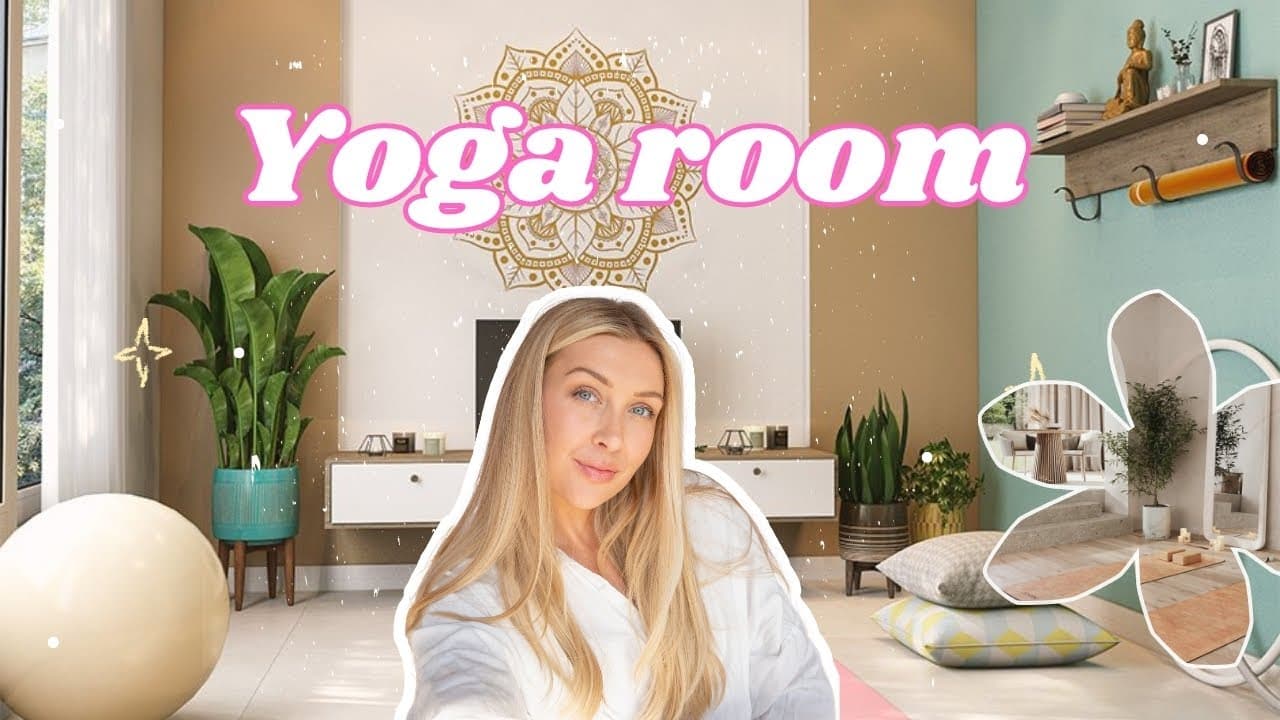
You glance at that underused corner of your bedroom, the one catching afternoon light, and picture something better. A space that slows your breath the moment you step in. That vision is closer than you think.
Creating yoga room ideas at home does not require a dedicated studio or a big budget. With the right colors, flooring, and clutter-free storage, even a spare corner becomes a sanctuary that supports daily practice.
Key Takeaways
- Sage, dusty blue, and pale blush walls reduce visual noise and signal calm to your nervous system before you even unroll your mat.
- Cork and bamboo flooring support barefoot movement and joint comfort far better than standard tile or carpet.
- Closed storage for mats, bolsters, and blocks keeps the room feeling spacious rather than like a cluttered equipment closet.
- A discrete Bluetooth speaker playing instrumental or nature sounds maintains breath rhythm without the cognitive interruption of lyrics.
- Layering warm-bulb lamps with natural window light gives you full control over mood from energizing morning flows to restorative evening sessions.
Full Video Transcript
Want to turn a small space into your personal oasis of calm? The yoga room isn't just about mats and poses. It's a sanctuary. But how do you make one that truly supports your practice? From the right colors to intentional storage, let's explore how to decorate a yoga room with meaning and balance. Before we dive into today's video, I'd like to welcome you to Decoredia, your go-to source for home decor inspiration. We bring you creative ideas to
transform your space with style and ease, helping you elevate every corner of your home effortlessly. If you're new here, don't forget to hit that subscribe button and turn on the bell icon so you never miss out on our latest decor inspirations. Now, let's get started. [Music] Which colors create a relaxing feel? Use soft tones like sage, dusty blue, off-white, or pale blush. These promote clarity and tranquility. Avoid jarring patterns or neon shades that might distract your
focus. Muted tones paired with natural elements keep your mind and surroundings grounded. Feeling these tones? Give it a like. Heat. Heat. [Music] [Music] [Music] What storage ideas are practical? Use baskets, hooks, or low cabinets to hold mats, bolsters, and blocks. Opt for closed storage to reduce visual clutter. Folded blankets can sit in neat piles or hidden in drawers. Simple, intentional storage maintains peaceful energy. Loving neat spaces? Tap like [Music] What sounds help during practice? Play ocean
waves, soft chimes, or instrumental tracks. Avoid lyrics. They can interrupt your breath and flow. Use a discrete Bluetooth speaker or white noise machine to support immersion without distraction. Vibe with this sound. Hit like [Music] [Music] What lighting helps set the mood? Soft lighting encourages calm. Choose lamps with warm bulbs or hang string lights for gentle glow. Open windows during the day for natural sunlight. Avoid harsh ceiling lights that can feel clinical and distract from deep focus
or relaxation. Love a glow up? Tap like if you agree. [Music] What's the best space for a yoga room? Choose a quiet, undisturbed area like a corner with sunlight or a spare bedroom. Size doesn't matter as much as how peaceful it feels. Keep the floor open. Remove unnecessary furniture and allow the space to breathe so you feel calm from the moment you enter. Love calm corners? Tap like now. [Music] [Music] [Music] [Music] What flooring is best
for yoga rooms? Use bamboo, cork, or hardwood for a warm, natural feel. These materials support barefoot movement. A layered mat or soft rug adds cushioning for floor poses. Avoid slippery or textured floors that can hinder balance and alignment during your flow. Planning floors like this idea. [Music] [Music] What furniture suits a yoga room? Keep furniture minimal. Maybe a bench for storage or a floor cushion. Everything should serve a purpose. Choose items with soft lines, neutral colors,
and natural materials. Don't overcrowd the space. Allow full movement and freedom. Enjoying this look? Give it a like. [Music] [Music] [Music] Should I include any plants? Yes, plants purify the air and bring nature indoors. Use snake plants, pose, or zz plants that thrive in low light. Place them in woven baskets or ceramic pots for a touch of earthiness. Greenery invites breath and life into your space. Green vibes only like to agree. [Music] How should I decorate
the walls? Keep wall decor minimal and inspiring. Use calming art, nature prints, or spiritual symbols like mandalas. Mirrors add depth, but avoid facing them directly while practicing. A single visual anchor keeps the mind steady and the room clean. Inspired by simplicity? Hit like [Music] [Music] [Music] How do I personalize the space? Add a vision board, journal, or altar with tokens that ground you. photos, stones, or a small statue. These elements create emotional connection and inspire presence.
Let your personality and practice gently shape the space. Make it yours like this idea. [Music] [Music] Can it be a shared space? Absolutely. Use a screen or rug to mark your yoga zone in a bedroom or living area. Roll out your mat when needed and store items nearby. What matters most is consistency and calm, not the size of the room. No spare room like this solution. [Music] [Music] [Music] How can scent enhance the room? Aroma therapy
adds depth to practice. Diffuse lavender, eucalyptus, or frankincense before you begin. Incense sticks or soy candles add warmth and subtle energy. Use scent to mark transitions between stillness and movement. Smell that peace like this tip. [Music] [Music] Your yoga space should feel like a retreat, not just look like one. Whether it's a corner or a whole room, choose textures, colors, and objects that invite you inward. With intention and simplicity, your space can support every breath, stretch,
and moment of peace. [Music] [Music] [Music]